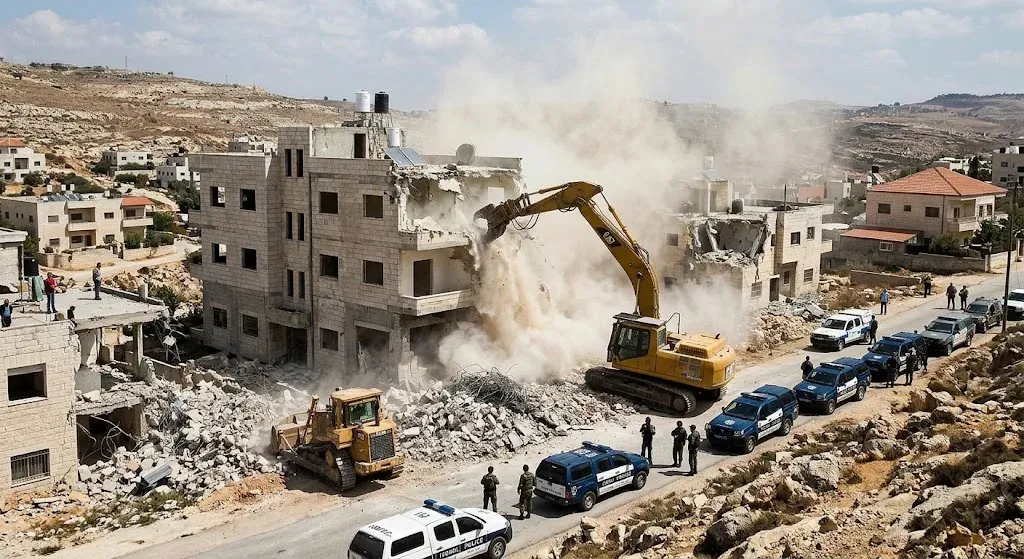
Israeli forces begin demolishing Palestinian buildings
Israeli forces have moved into parts of the West Bank to begin the systematic demolition of several Palestinian structures, citing a lack of official construction permits issued by the military administration. The sudden operations have triggered immediate alarm among local residents and community leaders who argue that obtaining such permits is virtually impossible for Palestinians living in these designated zones. Heavy military vehicles accompanied the bulldozers early in the morning, sealing off surrounding access roads and restricting movement for anyone attempting to approach the targeted neighborhoods. Eyewitnesses reported that residents were given very little advance notice before the heavy machinery began tearing down the outer walls of residential and commercial properties.
The sweeping demolition campaign has left numerous families displaced and scrambling to salvage whatever personal belongings they can carry before their homes are reduced to rubble. Local municipal councils have condemned the actions as a severe violation of international humanitarian law, pointing out that housing demolitions effectively uproot entire communities and deepen the humanitarian crisis in the region. Humanitarian organizations on the ground are rushing emergency aid supplies, tents, and temporary shelter kits to support those who have been left entirely homeless overnight. Protests have begun to gather near the edges of the affected areas, with residents and activists raising banners and chanting slogans against the ongoing displacement policies.
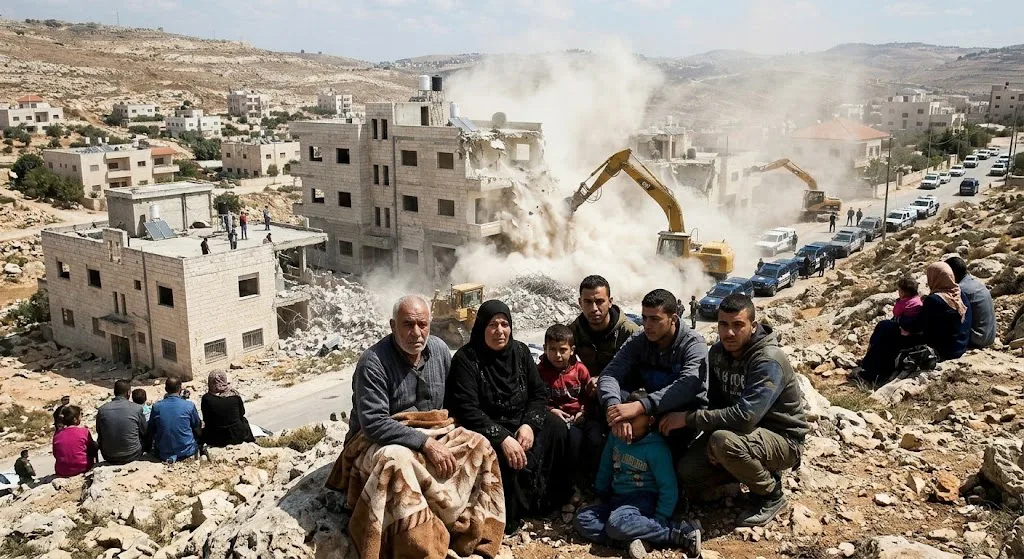
International bodies and diplomatic missions have expressed profound concern over the escalating situation, calling for an immediate halt to all forced evictions and property destructions. Western allies and regional stakeholders have repeatedly warned that such escalations undermine long-term stability and diminish any realistic prospects for a negotiated political resolution. Despite these diplomatic appeals, military authorities have maintained that the enforcement operations are strictly administrative and necessary to uphold regional zoning regulations. Legal representatives for the affected families are working around the clock to file emergency injunctions in local courts, though past legal challenges have rarely succeeded in halting ongoing enforcement actions once heavy machinery is deployed.
As the day progressed, clouds of thick dust rose across the landscape as additional structures were systematically brought down, altering the topography of the neighborhoods entirely. Community members gathered in nearby open spaces to comfort one another, sharing accounts of how generations of hard work and investment vanished within minutes under the weight of armored bulldozers. Local shopkeepers who lost their livelihoods expressed despair over the lack of economic alternatives or financial compensation provided by the authorities following the demolitions.
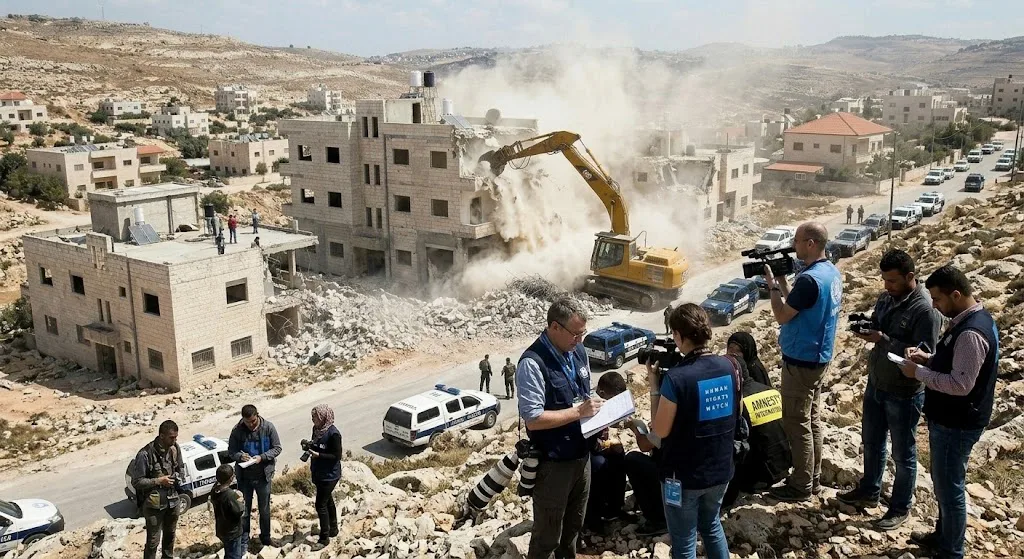
Human rights monitors have continued to document the extensive property loss, photographing the debris and interviewing affected individuals to compile comprehensive reports for international oversight bodies. These documentation efforts are seen as crucial for holding authorities accountable and ensuring that the plight of the displaced populations remains visible on the global stage. Local committees are simultaneously coordinating relief efforts to establish temporary schooling tents for children whose education has been abruptly interrupted by the displacement crisis.
The broader political fallout from these demolitions is expected to reverberate across diplomatic channels in the coming days, intensifying pressure on international mediators to intervene. Analysts suggest that the ongoing destruction of infrastructure will further entrench grievances on the ground, making future peace negotiations even more challenging to initiate. As twilight approaches, the affected communities are left facing an uncertain future, guarding the remains of their properties while determining how to rebuild their lives amidst ongoing restrictions.
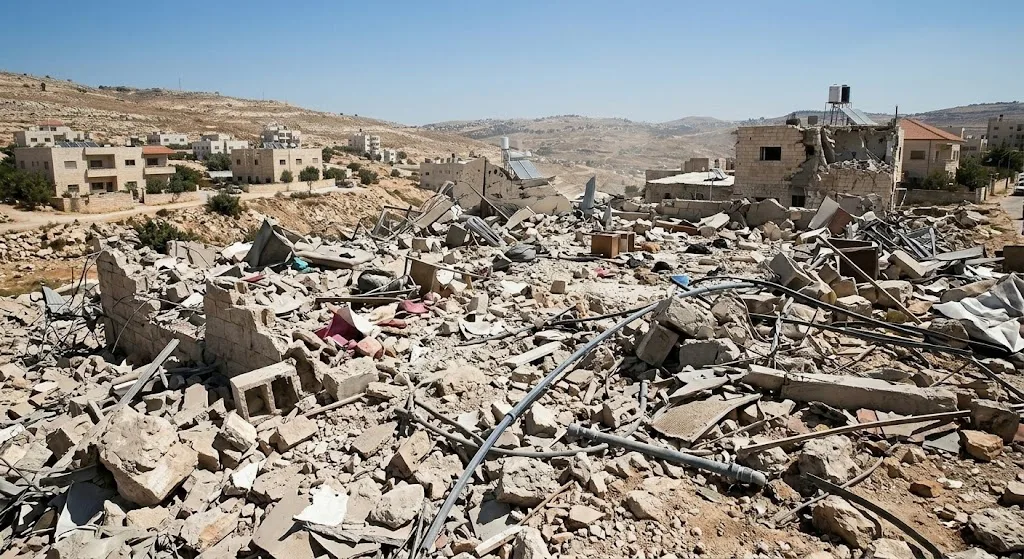
Local volunteers have begun clearing paths through the wreckage to allow emergency vehicles and pedestrian traffic to navigate the blocked alleyways safely. Municipal leaders have vowed to provide legal and logistical support to reconstruct temporary shelters, defying the ongoing administrative obstacles imposed by the occupying authorities. The resilience of the local population remains evident as families unite to support one another through this deeply distressing chapter, determined to maintain their presence on their ancestral lands despite mounting pressures.